Overlay Welding: Techniques, Processes, and Applications
Our industry takes pride in offering an array of overlay welding services that involve applying a protective layer of one material over another. This process is not just about enhancing the appearance or functionality of industrial components and equipment. It’s about ensuring their longevity and mitigating the effects of corrosion, wear, and erosion — common challenges faced by many sectors.

What is Overlay Welding?
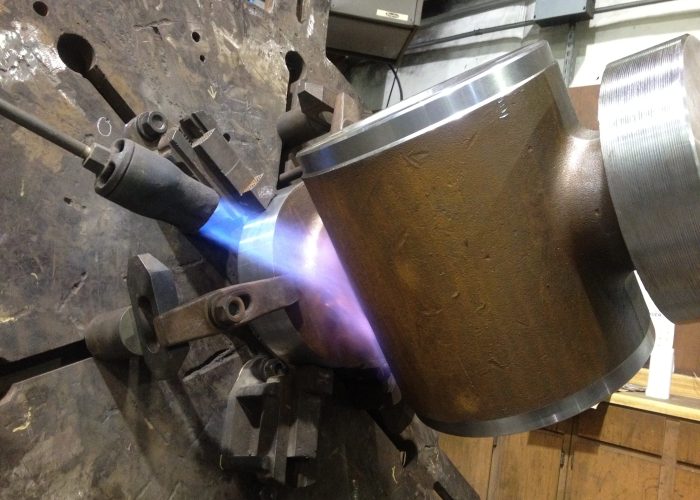
Overlay welding is a process where a corrosion-resistant alloy is bonded to the surface of industrial equipment, protecting against wear and corrosion. This method extends the lifespan of critical components, reducing maintenance costs and downtime.
Imagine the heavy machinery used in oil and gas, mining, or manufacturing plants. These machines, though robust, face unrelenting conditions that gradually wear them down. The concept of overlay welding comes into play as a powerful solution. By adding a protective layer over vulnerable areas prone to erosion or corrosion, it fortifies the equipment and extends its service life.
The application of overlay welding not only functions as a shield against the harsh operating environments but also serves as a buffer against mounting maintenance costs and unexpected downtime due to equipment failures. This proactive approach to equipment maintenance ensures fewer shutdowns and repairs, translating into substantial cost savings for companies utilizing these services.
For instance, imagine a cylindrical shaft used in a manufacturing facility that’s subjected to continuous friction and wear. Over time, this wear can compromise the integrity of the shaft, leading to costly downtimes and replacements. By applying an overlay weld on specific areas of the shaft, the risk of erosion is significantly reduced, thereby prolonging the shaft’s life and reducing maintenance expenses over time.
The importance of professional analysis and testing in overlay welding services cannot be overstated. As an ISO 9001 & ISO/IEC 17025 accredited independent lab, our comprehensive testing procedures ensure that the quality and reliability of the overlay welds meet industry standards. This not only instills confidence in the durability of the welds but also provides clients with the assurance that their industrial components are protected against premature failure.
Understanding these nuances in professional overlay welding services helps us appreciate how they play a critical role in safeguarding industrial equipment and components from premature deterioration, ultimately leading to substantial cost savings for businesses across various sectors.
These proven practices form the backbone of durable solutions that effectively address industrial challenges.
Overlay Welding Techniques
Overlay welding encompasses several versatile techniques that serve different purposes in enhancing the durability and resilience of equipment and components. Let’s break down these techniques for a better understanding.
Cladding
Cladding is a technique that involves depositing a corrosion-resistant layer onto a substrate, usually using processes like TIG (Tungsten Inert Gas) welding or PTA (Plasma Transferred Arc) welding. This method is widely utilized in industries where components are exposed to harsh environments, such as oil and gas, chemical processing, and power generation. By applying a robust layer of corrosion-resistant material, cladding enhances the longevity of components, protecting them from degradation due to exposure to corrosive substances.
In many instances, cladding can be a cost-effective solution to combat corrosion and erosion in critical machinery. For instance, in the oil and gas sector, pipelines and wellhead components are constantly exposed to corrosive fluids and abrasive particles. By applying cladding techniques, these components can be safeguarded against substantial wear and tear, prolonging their service life and reducing maintenance frequency. Moreover, the utilization of advanced welding processes like PTA enables precision deposition of these protective layers, ensuring uniform coverage and high-quality bonding with the substrate material.
Hardfacing
Hardfacing is another integral overlay welding technique used to increase the wear resistance of components by applying hard alloys to the surface. This process significantly enhances durability and reduces maintenance requirements for components subjected to abrasive wear or impact. Industries such as mining, construction, and manufacturing heavily rely on hardfacing to prolong the lifespan of crucial equipment parts like excavator buckets, conveyor screws, and crusher hammers.
The application of hardfacing presents an efficient approach to address wear-related challenges without necessitating complete part replacement. By strategically reinforcing specific areas prone to wear using hard alloys, businesses can optimize their operational costs by extending component longevity while minimizing downtime associated with frequent replacements or repairs.
Thermal Spraying
Thermal spraying involves the deposition of molten or softened material onto a substrate surface to form a protective coating. This technique is particularly favored for safeguarding components operating in high-temperature and corrosive environments. In industries such as aerospace, petrochemical, and marine engineering, thermal spraying plays a pivotal role in preserving the structural integrity of critical parts exposed to extreme operating conditions.
For instance, gas turbine blades operating within aerospace propulsion systems are frequently subjected to elevated temperatures during operation. Thermal spraying allows for the application of specialized thermal barrier coatings that shield these blades from thermal stresses and oxidation, thereby ensuring optimal performance and longevity under demanding operational circumstances. Additionally, in marine environments where exposure to saltwater can induce corrosion in ship structures and equipment, thermal-sprayed coatings provide indispensable protection against corrosive effects, contributing to prolonged service life and reduced maintenance expenditure.
By utilizing these diverse overlay welding techniques effectively, industries can fortify their equipment against detrimental environmental influences while advancing the overall reliability and longevity of critical assets.
Types of Weld Overlay Processes and Methods
When it comes to overlay welding, leveraging advanced methods can make a significant difference in achieving high precision and low heat input. The best process depends on the base metal, the overlay alloy, the required corrosion or wear resistance, the part geometry, and how much heat the component can tolerate. Let’s delve into these weld overlay methods and processes:
Laser Welding
Laser welding is an advanced technique that harnesses the power of a laser to melt the overlay material onto the substrate, ensuring an unparalleled level of precision and control. This method is particularly suitable for applications where intricate details and precise placement of the overlay material are crucial.
The use of a laser allows for pinpoint accuracy, enabling welders to apply the overlay material exactly where it’s needed without affecting the surrounding areas. This is especially beneficial when working with complex geometries or components with intricate designs. The controlled application of heat also minimizes the risk of distortion or damage to the base material, making laser claddings an ideal choice for delicate workpieces.
Shielded Metal Arc Welding (SMAW)
SMAW is a versatile manual process often used for repair work, maintenance, and smaller overlay jobs. Because it relies on handheld electrodes, it is especially practical when access is limited or when the workpiece cannot be easily moved into an automated setup. It is commonly chosen for localized hardfacing and field repairs, although productivity is usually lower than with mechanized methods.
Gas Metal Arc Welding (GMAW or MIG)
GMAW, often called MIG welding, uses a continuously fed wire electrode and is well suited to higher-deposition overlay applications. It is often preferred for flatter surfaces, larger parts, and production work where speed matters. Compared with manual processes, it offers better consistency and efficiency, though it may require careful parameter control to manage heat input and maintain overlay quality.
Tungsten Inert Gas Welding (TIG or GTAW)
GTAW, or TIG welding, is valued for precision and control. It produces clean overlays with excellent surface quality and is often used when low dilution is important, such as in corrosion-resistant alloy overlays on critical equipment. Because the process is slower than wire-fed alternatives, it is usually reserved for smaller areas, high-specification components, or applications where weld integrity is more important than speed.
Plasma Transferred Arc Welding (PTAW)
PTA or PTAW is a specialized overlay process that uses a plasma arc to melt powder or filler material onto the substrate. It is especially effective for producing high-quality overlays with precise control over thickness and dilution. PTA is often used in demanding hardfacing and corrosion-resistant applications because it can deposit durable layers with strong metallurgical bonding and good repeatability.
Submerged Arc Welding (SAW)
SAW is a high-deposition process commonly used for automated or semi-automated overlay work on larger components. Since the arc is covered by a layer of flux, the process supports deep penetration and efficient material transfer while helping protect the weld pool. It is particularly useful for long seams, cylindrical parts, and situations where thick overlay layers need to be applied consistently.
Electron Beam Welding
Electron beam welding is another advanced technique employed in overlay applications, capable of producing exceedingly fine and precise welds. In the realm of overlay welding, electron beam welding offers distinct advantages in terms of achieving superior metallurgical bonds and minimal dilution between the overlay and the substrate.
The use of an electron beam enables welders to achieve deep penetration and narrow fusion zones, resulting in highly refined welds with minimal heat-affected zones. This is particularly advantageous when working on components that demand exceptional strength and integrity in the overlay interface. With its ability to deliver precise and controlled fusion, electron beam welding stands as a valuable technique in high-precision overlay welding applications.
Choosing the Right Process for Your Project
Choosing the right overlay process for your project usually comes down to balancing performance, cost, and geometry. For example, manual methods may be ideal for repairs and awkward access, while automated methods are better for repeatable production work and large surfaces. In critical service applications, processes that offer tighter control over heat input and dilution are often preferred because they help preserve the base metal and improve overlay performance over time.
In practice, overlay welding is not a single technique but a family of processes used to solve different surface-engineering problems. Some methods prioritize speed and coverage, while others focus on precision, low dilution, or repair flexibility.
Commonly Used Materials in Weld Overlays
Selecting the right overlay material is just as important as choosing the welding process. The material directly affects how the finished surface will perform under real operating conditions, whether the priority is corrosion resistance, wear protection, heat resistance, or a combination of these demands.
Common weld overlay materials include:
- Stainless steel. A versatile choice that offers strong corrosion resistance and reliable performance across many industrial applications.
- Nickel-based alloys. These are frequently used in chemical processing, oil and gas, and other harsh environments where corrosion resistance and high-temperature stability are critical. Alloys such as Inconel and Hastelloy are common examples.
- Chromium-based alloys. Often selected for their hardness and ability to withstand abrasive or erosive service, making them useful in demanding wear applications.
- Cobalt-based alloys. Well-suited for components exposed to severe wear and heat, especially when long-term surface durability is a priority.
Not every base metal is equally suited to overlay welding. Materials such as titanium, copper, and aluminum can present compatibility challenges and may not be ideal candidates for this type of surface treatment. For that reason, the best material choice should always be based on the substrate, the operating environment, and the performance goals of the component.
In practice, a qualified welding provider will help evaluate the available options and determine whether a weld overlay is the right solution for the application. This ensures the overlay material supports both the immediate repair or protection needs and the long-term service life of the part.
Applications of Overlay Welding in Industry
Overlay welding is a crucial technique across different industries, such as oil and gas, power generation, mining, and manufacturing. It shields essential components from harsh operating conditions, extending their operational lifespan and reducing replacement costs.
- Oil and gas industry: where equipment faces highly corrosive and abrasive environments, materials such as valves, pipes, and fittings rely on overlay welding for protection against erosion and corrosion.
- Power generation: turbine blades and pump shafts benefit from overlay welding to resist extreme temperatures and pressures within turbines and pumps. This extends the service life of these critical components.
- Mining operations: heavy-duty machinery and equipment endure severe wear due to abrasive materials. Overlay welding is instrumental in refurbishing worn-out components such as excavator buckets, conveyor screws, and crusher hammers, thereby effectively salvaging these expensive parts and preventing costly replacements. Take the case of a mining company that relies on massive earthmoving equipment to extract resources from rugged terrain. The excavator bucket—the workhorse of the operation—gradually wears down due to constant exposure to abrasive materials. Instead of replacing the entire bucket, the company turns to overlay welding to rebuild its worn-out surfaces, revitalizing its functionality while significantly reducing replacement costs.
- Manufacturing sector: Overlay welding is indispensable in the production of heavy machinery and processing equipment. It allows manufacturers to enhance the durability and reliability of parts constantly exposed to extreme stress or wear. For instance, industrial mixers used in food processing plants benefit from overlay welding to increase wear resistance and prevent contamination from metal particles.
Ultimately, overlay welding serves as both a shield against deterioration and a cost-effective solution for maintaining crucial industrial components. The ability to refurbish deteriorated parts allows businesses to conserve resources while ensuring reliable operation in demanding environments.
The diverse range of applications clearly demonstrates how overlay welding is not only a protective measure but also a prudent investment for industries looking to extend the lifespan of their equipment and minimize operational costs.
Importance of Quality Assurance & Reliable Testing in Overlay Welding
Quality assurance is the foundation of successful overlay welding, ensuring long-term performance, safety, and reliability beyond simple material joining. This involves rigorous inspection, comprehensive testing, and strict adherence to industry standards such as ASME codes, AWS standards, and ASTM specifications, often backed by certifications and accreditations such as ISO 9001 and ISO/IEC 17025 for consistent quality management.
Key testing methods verify weld integrity without damage:
| Testing Service | Purpose |
|---|---|
| Non-Destructive Testing (UT, PT, MT, Radiographic) | Detects surface and internal flaws like cracks or discontinuities |
| Metallurgical Examinations | Identifies microstructure defects or irregularities |
| Hardness Testing | Confirms material properties meet performance specs under stress |
These practices—essential for demanding environments like offshore rigs, petrochemical plants, and power generation—prevent premature failures, reduce downtime, and ensure components withstand corrosion, wear, and extreme conditions. Like the welds holding a bridge together, skipping them risks catastrophic outcomes; thorough validation guarantees durability and client confidence.
Impact of Expertise and Equipment on Output Quality
The quality of overlay welding heavily relies on the expertise of the welders and the caliber of their equipment. Highly skilled professionals using advanced equipment can ensure precise application and uniformity, which significantly impacts the output quality of overlay welds.
Highly skilled welders bring the advantage of years of experience and practical knowledge to the table. Their ability to understand various materials, anticipate potential challenges, and select appropriate techniques is invaluable. They are not just technicians; they are experts who masterfully navigate through complex welding scenarios, ensuring that each weld is executed with precision and care, resulting in components with exceptional structural integrity and resilience.
For instance, a seasoned welder knows how to adjust welding parameters based on material composition, thickness, and environmental conditions. This attention to detail ensures that the overlay application is uniform, free from defects, and meets all necessary standards for strength and corrosion resistance.
Furthermore, advanced welding equipment plays a pivotal role in achieving high-quality overlay welds. Cutting-edge welding machines and tools enable welders to achieve better control over the welding process, resulting in consistent deposition of overlay material. This consistency is essential for ensuring uniform hardness, surface finish, and overall mechanical properties of the welded components.
Modern welding equipment also offers features such as programmable heat input controls, automated monitoring systems, and adaptive welding technologies. These features enhance the precision and repeatability of overlay welding, contributing to the superior quality and reliability of the final product.
In essence, the combination of skilled professionals utilizing state-of-the-art equipment creates a synergy that elevates the output quality of overlay welding processes. Their collective expertise ensures that each weld is not just a fusion of materials but a meticulously executed craftsmanship that enhances the performance and longevity of industrial components.
The interplay between expertise, technology, and precision underscores the critical role played by competent personnel and reliable equipment in achieving outstanding results in overlay welding processes.
By embracing technical mastery alongside cutting-edge tools, professionals can produce industry-leading welds that stand up to the most demanding applications. The seamless collaboration between expertise and top-notch equipment ensures that each welded component meets exceptional standards of durability and reliability.
Selecting a Professional Overlay Welding Provider
When choosing an overlay welding provider, critical factors must be taken into consideration to ensure the best results for your project. This decision will significantly impact the durability, reliability, and safety of your equipment or structure.
Certifications play a crucial role in demonstrating a provider’s commitment to industry standards and best practices. Look for providers who hold ASME U and U2 certifications, as these indicate that the company has been rigorously assessed for its welding quality and procedures. Additionally, ISO 9001:2015 certification is indicative of stringent quality management practices, ensuring that the provider adheres to internationally recognized standards for consistency and customer satisfaction.
Moreover, experience is indispensable in evaluating overlay welding providers. A company with a proven track record of successful projects and satisfied clients indicates its expertise in handling diverse welding requirements. Inquiring about previous projects and requesting references helps gauge their proficiency in delivering durable and high-quality solutions.
For instance, a provider with extensive experience working with prominent industry players such as Avesta Welding, Baker Hughes, BP, Celanese, Exxon Mobil, Halliburton, and Shell signifies their capability to meet the stringent demands of these reputable organizations.
In-house testing capabilities are another critical aspect to consider when selecting an overlay welding provider. Thorough quality control and assurance play a pivotal role in ensuring that the welded components meet specified standards and performance requirements. A provider equipped with comprehensive in-house testing facilities can streamline the entire process by conducting necessary tests without third-party involvement, expediting project timelines, and ensuring stringent quality checks.
By carefully examining these aspects—certifications, experience, track record, and in-house testing capabilities—you can make an informed decision when selecting a professional overlay welding provider like WH Labs. This diligence will not only lead to superior project outcomes but also contribute to long-term operational reliability and safety.
Understanding the critical factors in selecting an overlay welding provider lays the foundation for assessing the impact of expertise and equipment on output quality.
Contact our certified welders to discuss how overlay welding services can benefit your specific industrial equipment.
Read More:
Weld Overlay vs Cladding Guide