What is Hardfacing in Welding & Applications in the Industry
In high‑wear environments, metal parts rarely fail because they break in two; they fail because their surfaces slowly grind away. Hardfacing is a targeted welding‑based technique that combats this problem by adding a hard, wear‑resistant layer to the surface of a component. According to US Hardfacing Welding Market Research, hard facing can dramatically extend the lifespan or service life of equipment by 30% to 300%, depending on the application, which is 25%-75% of the cost of replacing the part.
By depositing a tougher alloy onto a softer or worn base metal, hardfacing turns vulnerable surfaces into durable “armor” without needing to remake the entire part from expensive materials.
What Is Hardfacing?
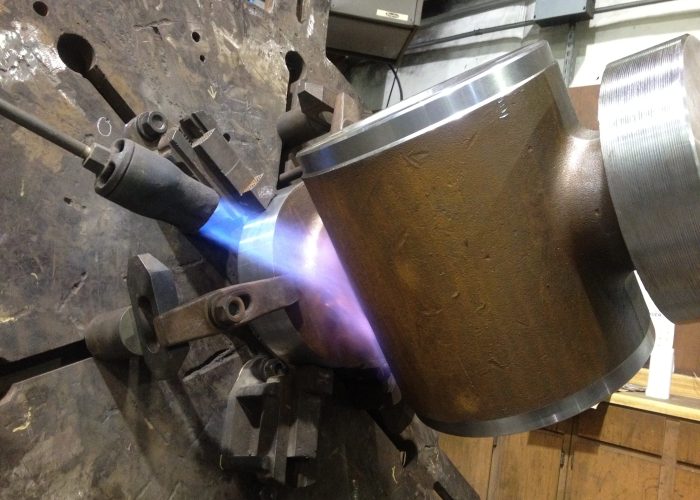
Hardfacing (also called hard surfacing) is a surface‑engineering process in which a harder, wear-resistant alloy is welded onto a softer base metal to improve its resistance to abrasion, impact, erosion, or metal‑to‑metal contact. The hard material is metallurgically bonded to the base metal using specialized electrodes or filler rods. It is typically 1 to 10 mm thick, although thicker overlays are possible depending on the process and application.
This technique can be applied to brand‑new components to protect them from wear from day one, or to worn parts that need to be rebuilt close to their original dimensions and returned to service.
Why Hardfacing Matters in Industry
In sectors like mining, construction, agriculture, manufacturing, and power generation, equipment is constantly exposed to abrasive media, heavy impact, and harsh operating conditions. Over time, this leads to a gradual loss of material from the critical surface: buckets thin out, crusher hammers lose their profile, and plowshares wear shorter and narrower.
Hardfacing addresses this by providing a sacrificial, engineered wear layer that takes the punishment, while the underlying component maintains strength and structural integrity. Done correctly, hardfacing can extend the working life of parts several times over, reducing downtime, cutting replacement costs, and allowing the use of cheaper base metals with a high‑performance overlay only where it is needed.
Key Benefits of Hardfacing
When correctly specified and applied, hardfacing offers a powerful combination of technical and economic benefits:
- Extended component life: Dramatically improves resistance to abrasion, impact, and erosion, often multiplying component life compared with unprotected parts.
- Reduced maintenance costs and downtime: Fewer replacements and longer service intervals mean higher equipment availability and lower maintenance budgets.
- Lower material costs: Allows designers and operators to use relatively inexpensive base metals, adding premium alloys only on surfaces that actually see wear.
- Flexible, targeted protection: Different areas of the same component can receive different alloys or bead patterns based on local wear conditions.
- Effective for both repair and prevention: Works just as well for rebuilding worn parts as for pre‑protecting new ones, making it a versatile tool in maintenance and production.
Typical Hardfacing Applications
Hardfacing can be used anywhere components face high wear or repeated impact. Common examples include:
- Mining and quarrying: Excavator bucket lips and teeth, dragline buckets, crusher jaws, hammers, chutes, hoppers, and conveyor screws.
- Construction and earthmoving: Bulldozer blades, grader and loader cutting edges, asphalt paver parts, and wear plates.
- Agriculture: Plowshares, cultivator tines, harrows, and other soil‑engaging tools are subjected to constant friction and impact from rocks and soil.
- Power and processing industries: Coal pulverizer components, boiler tubes, mixer paddles, sugar‑mill rollers, and pump impellers.
- Recycling and shredding: Shredder shafts and knives that see extreme abrasion from scrap, wood, or waste streams.
In all these areas, hardfacing is used both to rebuild worn components and to pre‑protect new parts before they ever go into service.
Hardfacing vs Cladding
Hardfacing and cladding are both overlay processes, and they can use similar technologies, but they are aimed at different kinds of damage.
- Hardfacing focuses on wear resistance.
A high‑wear alloy, often containing hard carbides, is deposited onto surfaces that experience abrasion, impact, or erosion to extend service life. The surface of the workpiece does not have to be perfectly smooth, and hardfacing is often applied in bead patterns that manage material flow and concentrate protection where it is needed most. - Cladding focuses on corrosion and environmental resistance.
A corrosion‑resistant or otherwise dissimilar alloy—commonly stainless steel or nickel‑based material—is overlaid in a relatively continuous, smooth layer to protect the base metal from chemical attack, high‑temperature oxidation, or aggressive media.
From a materials point of view, hardfacing alloys are typically engineered for hardness and wear resistance (for example, chromium carbide or tungsten carbide rich deposits), whereas cladding alloys are selected for their corrosion resistance, oxidation resistance, or specific mechanical properties at temperature.
Both hardfacing and cladding can be carried out by similar processes—such as flux‑cored arc welding, plasma transferred arc (PTA), and various laser‑based techniques—but the choice between them depends on what you are trying to protect against: mechanical wear (hardfacing) or corrosion and environmental attack (cladding).
Common Welding Processes for Hardfacing
A range of welding and surfacing processes and techniques can be used for hardfacing, chosen according to production volume, part size, accessibility, and desired quality. Some of the most common methods for hardfacing are:
- Shielded Metal Arc Welding (SMAW / MMA / Stick Welding):
SMAW is a manual arc welding process that uses flux‑coated hardfacing electrodes; it is simple and portable, making it ideal for field repairs and small jobs, though deposition rates are moderate and slag removal is required. - Gas Metal Arc Welding (GMAW / MIG) and Flux‑Cored Arc Welding (FCAW):
Use solid or cored hardfacing wires; these processes offer higher deposition rates and continuous wire feed, which is well-suited for larger surfaces and production environments. MIG (metal inert gas) or FCAW is often preferred for on‑site hardfacing of large components due to its speed and ease of control. - Submerged Arc Welding (SAW):
Provides very high deposition rates under a blanket of flux, making it a strong choice for long, straight runs on large, rotational, or plate components. - Gas Tungsten Arc Welding (GTAW / TIG) and Plasma Transferred Arc (PTA):
Offers precise control and low dilution, which is valuable when applying high‑alloy or expensive hardfacing materials on components like valve seats, turbine parts, or high‑temperature tooling. - Flame and thermal spray / spray‑fuse systems:
Used for powders and self‑fluxing alloys where heat input must be controlled or where machining after deposition would be difficult; thermal spray, in particular, is useful for parts sensitive to distortion.
Each process has trade‑offs in equipment cost, skill level, deposition rate, and control over dilution (how much the base metal mixes into the overlay), which directly affects final hardness and wear performance. At WH Labs, we make sure to carefully choose the best welding solution for your project.
Hardfacing Materials and Base Metals
The base material for hardfacing is often a relatively inexpensive carbon steel or low‑alloy steel that provides the structural strength of the component. The hardfacing material is then chosen specifically to handle the dominant wear mechanism. Carbon steel, stainless steel, manganese steel, cast steel, cast iron, and a variety of alloys can all be hardfaced. In general, typical hardfacing alloys include:
Iron‑based chromium carbide alloys:
Widely used for severe abrasive wear, the hard chromium carbides form within an iron matrix and provide excellent resistance to sliding abrasion.
Tungsten carbide composites:
Extremely hard particles embedded in a metallic matrix, used where extreme abrasion and sometimes impact are present, such as in drilling and mining tools.
Cobalt-based alloys (e.g., Stellite‑type materials):
Offers good wear resistance combined with high‑temperature capability and resistance to galling, often used on valve seats, turbine components, and hot‑working tools.
Nickel‑based hardfacing alloys:
Nickel-base alloys are chosen where both corrosion and wear are factors to consider, especially at elevated temperatures, for example, in chemical processing or power generation equipment.
Martensitic and tool‑steel‑type overlays:
Provide a hard yet relatively tough deposit that can be machined, suitable for metal‑to‑metal wear and applications where impact and load are significant.
Selecting the right alloy means considering the base metal, the type of wear (pure abrasion, abrasion plus impact, metal‑to‑metal sliding, erosion, or high‑temperature wear), and any secondary demands such as corrosion resistance.
The Hardfacing Workflow: From Worn Part to Protected Surface
Although many variations exist, a typical hardfacing job follows a logical sequence
- Cleaning and inspection
The component is thoroughly cleaned to remove dirt, grease, paint, rust, or existing coatings, then inspected for cracks, deformation, and the degree of wear. Proper cleaning is essential to avoid porosity and cracking in the overlay. - Buttering and build‑up (if needed)
If the base metal is difficult to weld or if there is a large difference in alloy content between base and hardfacing material, a “butter” layer of a more compatible filler may be applied. Severely worn areas are then rebuilt close to original dimensions with crack‑resistant build‑up materials before the actual hardfacing layer is deposited. - Applying the hardfacing layer
The chosen alloy is deposited in one or more passes, using a suitable welding process and bead pattern to control dilution, heat input, and coverage. The number of layers depends on the required thickness, service conditions, and risk of cracking. - Cooling and finishing
Controlled cooling and, if necessary, post‑weld heat treatment help manage residual stresses and prevent cracking. Finally, the surface may be ground or machined to meet dimensional, flatness, or surface‑roughness requirements—especially when the component interfaces with other parts.
Throughout the hardfacing process, welders must control heat input and dilution so that the final microstructure and hardness match the design intent rather than being overly softened by mixing with the base metal.
Bead Patterns and Wear Management
Hardfacing does not always mean a fully smooth, continuous overlay. The bead pattern can drastically influence performance, especially in applications where bulk material flows across a surface.
Common patterns include:
- Stringer beads: Straight, parallel beads providing uniform protection along the wear path.
- Dot or “island” pattern: Individual hardfacing deposits spaced apart so that abrasive material fills the gaps and forms a protective “dead bed,” ideal for large aggregates and impact situations.
- Waffle or cross‑hatch pattern: Intersecting beads that create pockets to trap fine material, allowing the packed material to shield the underlying surface while the hard beads carry the load.
These patterns can reduce filler consumption and welding time while still delivering excellent wear protection where it matters most.
Putting It All Together
Hardfacing is best understood as surface armor for hardworking metal components. By selecting the right overlay alloy, the right welding process, and the right bead pattern, you can transform a vulnerable surface into a durable, engineered barrier against wear.
Cladding plays a similar overlay role but is aimed at protecting against corrosion and harsh environments rather than mechanical abrasion, using corrosion‑resistant alloys in smoother, more continuous layers. Together, these two techniques give maintenance and reliability teams powerful options to extend equipment life, improve uptime, and control costs in demanding industrial environments.
Frequently Asked Questions
What is check-cracking?
Check‑cracking is a pattern of fine, closely spaced transverse cracks that forms in hardfacing or carbide‑rich overlays during cooling, caused by high residual stresses in the very hard weld metal. The cracks propagate through the thickness of the weld bead and stop at the parent metal, as long as it’s not brittle. In cases in which the parent metal is hard or brittle, you should select a buffer layer of a softer, tougher weld metal.
What type of shielding gas is used in GMAW hardfacing?
Pure argon and mixtures of argon with oxygen or carbon dioxide can be used to achieve low penetration and dilution. Pure carbon dioxide is another option, but it will cause more spatter than an argon mixture.
What is a ball transfer and why is it important?
Welding wires transfer molten metal across the arc either as a fine spray or as larger globules (“balls”). Spray transfer produces a smooth‑sounding stream of tiny droplets, gives deeper penetration, and is preferred for joining. Globular or ball transfer produces larger droplets with a crackling, noisier arc, more spatter, and generally lower penetration, which can be useful for hardfacing overlays with limited dilution. Parameters such as stick‑out, shielding gas, amperage, and voltage all influence droplet size and transfer mode, and self‑shielded (gasless) wires operate in globular/ball transfer.
When is a cobalt or nickel hardfacing alloy used?
Cobalt and nickel hardfacing alloys are used when parts must withstand both severe wear and demanding environments, such as high temperatures, galling, or corrosion.
Typical uses include valve seats, stems, gates, and other sealing or sliding surfaces in power generation, petrochemical, and process plants, where cobalt‑based alloys (like Stellite‑type materials) provide wear and galling resistance at elevated temperatures, and nickel‑based overlays are chosen when abrasion resistance must be combined with strong corrosion resistance or lower dilution.
What does buffer alloy or buildup mean?
A build‑up alloy is a relatively tough, crack‑resistant weld metal used first to restore worn parts to near‑original shape and to create a strong foundation before the final hardfacing layer is applied.
A buffer alloy or layer is an intermediate weld layer placed between the base metal and the hardfacing deposit to improve bonding, reduce dilution, and stop cracks from the very hard overlay propagating into the base metal.
Can cast iron be hardfaced?
Yes, cast iron can be hardfaced, but it requires special procedures because it is brittle and crack‑sensitive.
Typically, you must use low‑heat input, suitable buffer or nickel‑type build‑up layers, and careful preheat and slow cooling to avoid cracking in the casting and the hardfacing deposit.