
Houston Metallurgical Testing Lab
Metallurgical testing is crucial for quality assurance, performance optimization, and reliability of metal components and structures in various industries, including manufacturing, oil and gas, construction, aerospace, and automotive. WH Labs offers professional metallurgical testing services in Houston, TX, including mechanical, chemical, and special material analysis, to help you check your metals for strength, make sure they follow standards, and keep your operations running safely. Our ISO 9001 & ISO/IEC 17025 certified metallurgical laboratory is equipped with state-of-the-art technology supervised by a team of experienced chemists, metallurgists, and professional engineers. Whether you need tensile testing or a complex failure analysis that requires multiple metallurgical analysis techniques, we have the expertise, capacity, and capabilities to handle all your material testing needs. Contact our Houston metallurgical testing lab today at 713-895-7504 for a consultation or to request a quote.
Our Metallurgical Testing Services
We employ exhaustive methodologies combined with high-technology testing equipment that can detect low-level impurities and microscopic fractures, which provide precise material characterization across multiple parameters. Our expertise spans a wide range of critical analyses, including steel plate quality assessments, pressure vessel integrity evaluations, and thorough weld inspections. Advanced techniques we use include SEM analysis for microstructural or metallographic examination, X-ray diffraction to identify crystalline phases, and electron backscatter diffraction for grain orientation mapping. We’ve also optimized our procedures to deliver compositional analyses with accuracy to parts per million using ICP-MS and XRF spectroscopy.
Metallurgy & Special Testing
- Coating Testing
- Scanning Electron Microscopy
- Corrosion Evaluation
- Heat Treatments & Analysis
- Grain Size
- Fracture Mode Analysis
- Simulated Environment
- Ferrite Determination

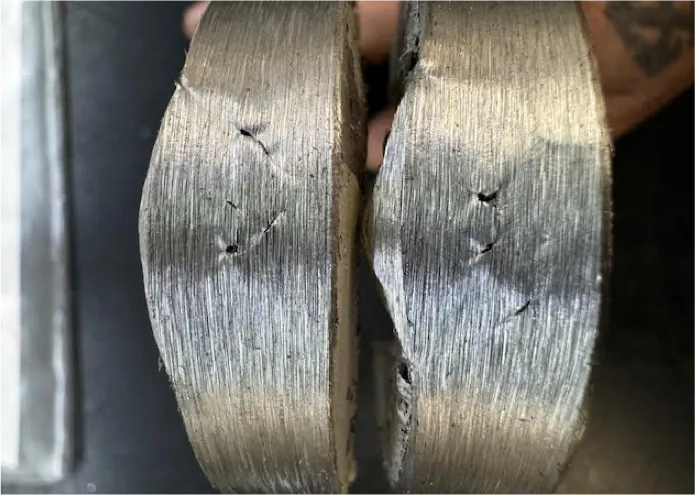
Mechanical Testing
- Tensile, Bend, and Compression
- Impact Testing – Charpy or Izod
- Hardness Testing – Rockwell, Brinell, Micro & Portables
- Proof Load
- Ring Flattening
Chemical Testing
- Alloy Identification
- Metals Composition – Ferrous and Non-ferrous Alloys
- Scales and Deposit Analysis
- SEM with Light Element EDS Capability
- Field PMI

Standards & Specifications
- ASTM A370 – Mechanical Testing of Steel Products
- ASTM E1019 – Determination of Carbon, Sulfur, Nitrogen, and Oxygen in Steel, Iron, Nickel, and Cobalt Alloys by Combustion and Inert
- ASTM E18 – Rockwell Hardness of Metallic Materials
- ASTM E112 – Determining Average Grain Size
- ASTM A751 – Chemical Analysis of Steel Products
- ASTM E407 & E340 – Microetching Metals and Alloys
- ASTM E3 – Preparation of Metallographic Specimens
- ASTM E562 – Determining Volume Fraction by Systematic Manual Point Count
- ASTM E45 – Determining the Inclusion Content of Steel
- ASTM E384 – Microindentation Hardness of Materials
- ASTM E23 – Notched Bar Impact Testing of Metallic Materials
- AWS B4.0 – Mechanical Testing of Welds
Quality Assurance and Rigorous Certification
Our lab implements strict quality assurance measures and certification processes to guarantee the highest standards of accuracy and reliability. We employ multi-step quality checks throughout our testing processes, from sample preparation to final analysis.
These detailed procedures include certifying forging quality, analyzing a wide range of materials, and conducting thorough assessments on various items ranging from beer cans to brass musical instruments.
Full-Service Houston Metallurgical Lab
At WH Labs, we know that when your gear or parts fail, it can slow your job down or get costly fast. That’s why our metallurgical testing isn’t just about lab reports—it’s about giving you peace of mind. Our tests can show you if your material is solid, find hidden weaknesses, verify that it meets the required specifications, and ensure regulatory compliance with industry standards. That helps you avoid headaches, keep your crew safe, and get the job done right the first time. Our ISO 9001:2015 and ISO/IEC 17025:2017 accredited testing laboratory serves clients from various industries across Texas with high-quality equipment and fast turnarounds. Contact us today to get a free quote!
Areas We Serve
Areas we serve in Texas include Harris County, Bellaire, Jersey Village, Spring Valley Village, Aldine, TX, South Houston, West University Place, La Porte, Pasadena, Jacinto City, Bayport Industrial District, and more.
FAQs
What is Metallurgical Analysis?
Metallurgical analysis is the scientific examination of metal alloys to determine their composition, structure, and mechanical properties. It involves a combination of chemical analysis, physical, and microscopic testing methods to evaluate how these materials perform under various conditions.
Which Metallurgical Materials can be Tested?
At White House Laboratories, our testing capabilities and analysis services include both ferrous (such as stainless steel and cast iron) and non-ferrous materials. Non-ferrous materials we can test include magnesium, copper (pure, brass, and bronzes), aluminum, and more.
What Sample Size is Required to Perform Metallography Analysis?
The required sample sizes are varied and depend on the type of material, the area of interest, and the equipment used. However, most techniques allow for testing minimal sample sizes and will require laboratory extraction or preparation (including machining to prepare a specimen for analysis).
Can You Test Custom Alloys or Proprietary Material Compositions?
We specialize in analyzing custom alloys and proprietary compositions using our advanced spectrometry services. We’ll maintain strict confidentiality protocols while providing extensive characterization of your unique material formulations.
How Long Does Typical Metallurgical Testing Take to Complete?
Metallurgical testing durations range from one week to four weeks according to the complexity level and sample preparation requirements, and analysis needs for material validation in your project.
Can Testing Be Performed On-Site or Only in Laboratories?
Portable equipment allows us to perform specific metallurgical tests at the site, while laboratory facilities with specialized instruments remain necessary for precise microstructural analysis and advanced property characterization.
Are There Non-Destructive Testing Options for Irreplaceable Components?
Our testing services include non-destructive inspection methods of ultrasonic, radiographic, eddy current, and magnetic particle testing that help protect valuable components while generating vital metallurgical information.
What is the Recommended Frequency for Materials Testing Throughout Long Projects?
The recommended testing period for materials spans from six months to one year, but the exact interval depends on environmental exposure, along with loading conditions and regulatory needs. The assessment of critical components needs to occur more frequently to maintain structural integrity.
What Qualifications Should Metallurgical Testing Technicians Possess?
The personnel conducting metallurgical testing should hold formal materials science education combined with specialized certifications, practical laboratory experience, and knowledge of ASTM standards. The technicians require analytical competencies to properly interpret advanced metallurgical information.