What is the Difference Between MIG and TIG Welding?
This article explains the practical differences between MIG and TIG welding, covering process operation, advantages, suitable materials, applications, equipment, quality, skill requirements, and guidance for selecting the right method.
Overview of MIG and TIG Welding Processes
MIG and TIG are two common types of welding processes that use an electric arc and shielding gas to join different metals.
What is MIG welding (Metal Inert Gas)?
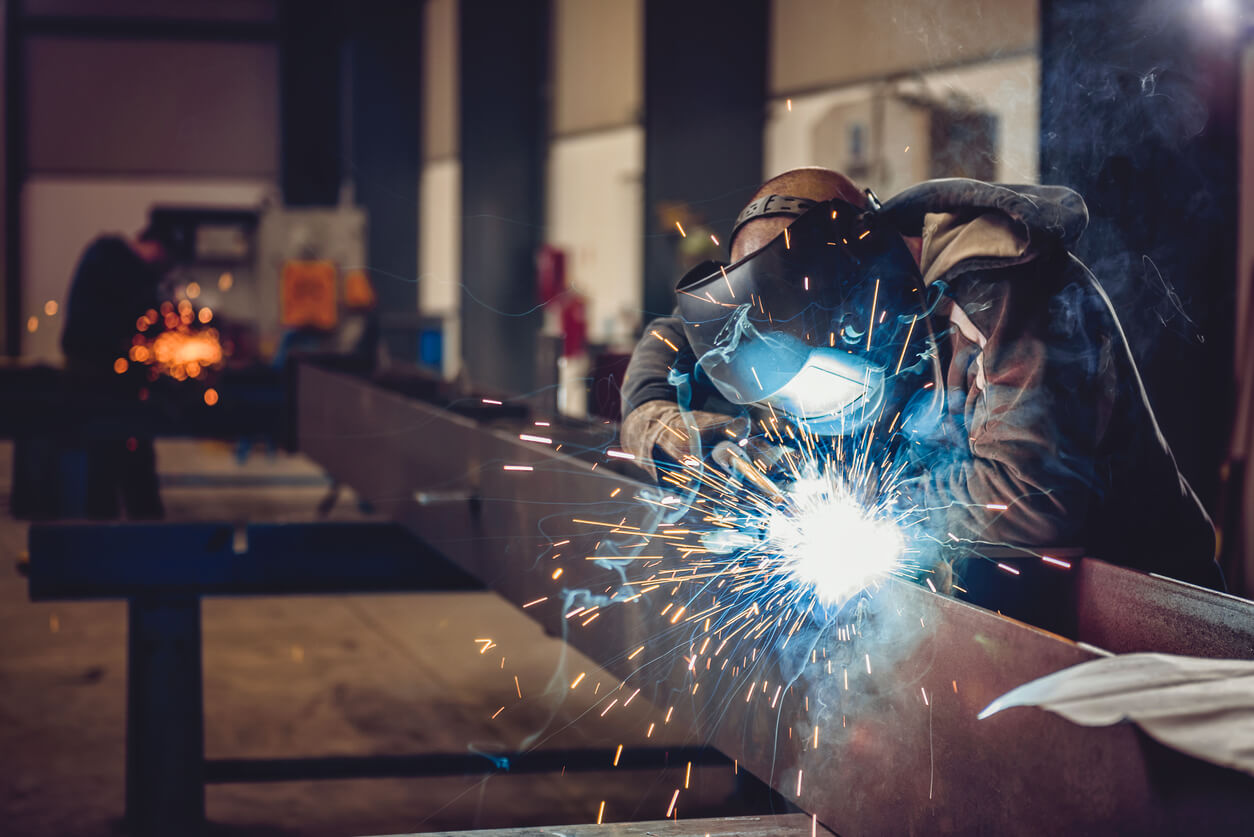
MIG welding, also called GMAW (Gas Metal Arc Welding), uses a continuously fed wire electrode and a shielding gas. The wire melts and joins the base metals while the gas protects the molten weld pool from atmospheric contamination. The operator usually holds a trigger to feed the wire; travel speed and welding gun angle control the bead. MIG welders also avoid the foot pedal challenge, making the MIG process easier for beginner welders to learn.
What is TIG welding (Tungsten Inert Gas)?
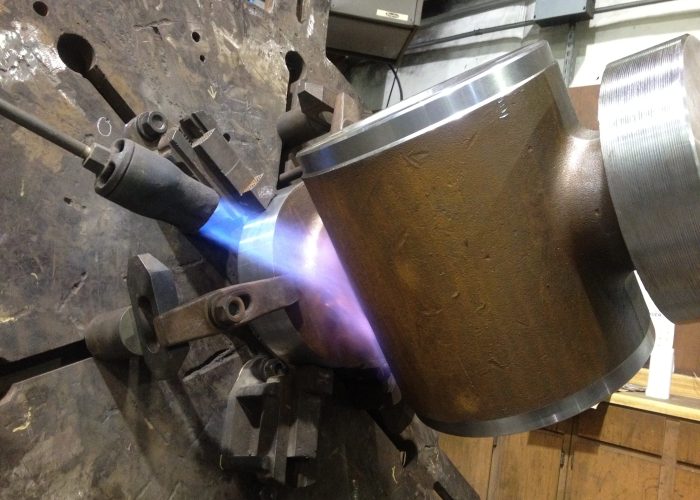
TIG welding, or GTAW (Gas Tungsten Arc Welding), uses a non-consumable tungsten electrode to produce the arc. Filler metal (welding wire) is added manually (or omitted for autogenous welds), and a shielding gas protects the weld. The TIG process provides precise control of heat and filler addition, often producing cleaner, more controlled, and aesthetically pleasing welds for critical joints.
Key differences
Understanding the differences between MIG welding and TIG welding can help you choose the right welding process for your project based on the advantages and disadvantages of each method.
- Electrode type: MIG uses a consumable wire (melts during welding), while TIG uses a non-consumable tungsten electrode (does not melt).
- Filler delivery: MIG automatically feeds filler wire (the metal added to create the weld); TIG welding requires the operator to manually add a filler rod (extra metal) or may use no filler at all.
- Heat control: TIG offers finer, localized heat control; MIG typically deposits heat faster and over a wider area.
- Shielding gas: Both use inert/active gases. MIG commonly uses CO2, argon blends, or pure argon with mixes; TIG generally uses pure argon or argon-helium blends.
- Power source and polarity: MIG welders frequently use DC (direct current) with straight or reverse polarity, depending on the wire. TIG welders commonly use DCEN (direct current electrode negative) for steels and AC (alternating current) for aluminum (to clean oxide).
- Speed and deposition rate: MIG welding is faster than TIG because it has higher deposition rates and faster cycle times; TIG is slower but produces higher-quality, precise welds.
Material suitability
Both processes can join many metals, but they excel with different materials:
- Steel (mild and stainless): MIG is fast and economical for carbon steel; TIG is preferred for high-quality stainless work where appearance and control matter.
- Aluminum: TIG welding is perfect for thin-gauge aluminum and precise joints; MIG (with proper equipment and a spool gun) is faster for thicker sections and production work.
- Exotic alloys (titanium, copper alloys): TIG is usually preferred due to heat control and cleanliness requirements.
Quality, appearance, and strength
TIG welds are typically cleaner, with a finer, more uniform bead appearance due to precise heat input and control over filler. TIG produces stronger metallurgical joints for thin or critical components. MIG welds can be strong and sound when done correctly, but tend to show more spatter and require more post-weld cleanup, especially with flux-cored or CO2 shielding.
Speed, productivity, and cost
- Speed: MIG is faster for general fabrication and production environments due to continuous wire feed.
- Productivity: MIG requires less operator skill to produce acceptable results on thicker materials, making it common in manufacturing.
- Cost: MIG equipment and consumables are often cheaper per joint for production work. TIG welding equipment can be more expensive per hour due to lower deposition rates and higher operator skill/time requirements.
Skill level and learning curve
MIG welding has a shorter learning curve; beginners can achieve useful results quickly. TIG welding demands more hand coordination (welding torch in one hand, filler in the other) and a deeper understanding of heat control, making it harder to master but rewarding for precision work.
Common applications
- MIG: Auto body repair, structural steel fabrication, frames, fences, general workshop, and production fabrication.
- TIG: Aerospace components, bicycle frames, motorcycle parts, stainless steel food equipment, thin-sheet aluminum, ornamental metalwork.
Equipment and setup considerations
Both processes require a welding power source, proper shielding gas, safety gear, and suitable wire or rods, but there are differences:
- MIG setup: Wire feeder, drive rolls, contact tip, nozzle; appropriate shielding gas or flux-cored wire; optional spool gun for aluminum; relatively forgiving parameters.
- TIG setup: High-frequency start or lift start, tungsten selection and grinding, precise gas flow, filler rod selection, foot pedal or fingertip amperage control for heat modulation.
Common problems and troubleshooting
MIG issues
- Porosity: bad gas coverage, drafts, contaminated metal or wire.
- Excessive spatter: incorrect voltage or wire-feed settings, dirty metal.
- Poor penetration or burn-through: incorrect polarity, travel speed, or material thickness settings.
TIG issues
- Contamination and tungsten inclusion: dirty joint, touching tungsten to the weld pool, or wrong tungsten type.
- Poor arc stability: incorrect gas flow, worn torch parts, or wrong AC balance for aluminum.
- Cracking or weak welds: excessive heat input, poor joint fit-up, or wrong filler alloy.
Safety and preparation
Both welding methods require appropriate PPE: a welding helmet with the correct shade, a respirator or adequate ventilation for fumes, gloves, fire-resistant clothing, and eye protection for bystanders. Clean fit-up and proper joint preparation reduce defects. For TIG, keep the joint and filler rod free of oil, grease, and oxides; for MIG, ensure proper grounding and gas coverage.
Choosing between MIG vs TIG Welding
Decide based on these practical factors:
- Priority on speed and production: Choose MIG for higher deposition rates and easier operator training.
- Priority on appearance and precision: Choose TIG for cleaner beads and fine control on thin or exotic metals.
- Material type: For thin aluminum or exotic alloys, prefer TIG; for thicker carbon steel or high-volume work, prefer MIG (with appropriate shielding).
- Budget and tooling: Consider MIG for lower initial cost and faster throughput; TIG for quality-critical work where labor cost is justified.
Practical tips
- For beginners, start with MIG to learn motion and joint fit-up, then progress to TIG for detailed work.
- Keep metals clean: remove paint, oil, rust, and oxides for both processes; for aluminum, clean with a stainless brush designed for aluminum before TIG.
- Match filler and base metal: Use compatible filler alloys to avoid brittleness or corrosion issues.
- Use the proper shielding gas and check the flow rates; too high a flow causes turbulence, too low a flow causes porosity.
- Practice weld settings on scrap pieces of the same material and thickness before welding the actual part.
When to use both
Many shops use both MIG and TIG depending on the job. A common workflow: use MIG for structural or speed-focused sections and TIG for critical joints, thin areas, or final cosmetic passes. Combining processes leverages the strengths of each method.
Conclusion
The core difference between TIG and MIG welding lies in electrode type, filler delivery, heat control, and the balance between speed and precision. Choose MIG for speed, production, and thicker steels; choose TIG for precise, clean, high-quality welds on thin or specialty metals. Evaluate material, part requirements, available skill level, and budget to select the appropriate process for each project. Our certified welders have years of experience in various arc welding processes, including MIG, TIG, and Stick welding. Reach out to get a free quote!
Frequently asked questions
Is TIG stronger than MIG?
TIG can produce stronger, higher-integrity welds in thin or critical applications due to better heat control and cleaner fusion. For many structural applications, well-executed MIG welds are equally strong when properly designed and executed.
Can MIG weld aluminum?
Yes. MIG can weld aluminum with the correct equipment (spool gun or push-pull system) and shielding. TIG is often preferred for thin aluminum or precision work.
Which is cheaper to learn?
MIG is generally cheaper and easier to learn than TIG, so it is better for beginners or less experienced welders. TIG requires more training and practice to reach a professional level.
References:
- (2022). MIG Welder Eligibility, Experience, Duties, Skills, Jobs, and Salary. https://www.weldinginfo.org/welding-careers/mig-welder-job-description/
- (2025). Analysis of TIG-MIG Hybrid Welding and Its Impact on Mechanical and Microstructural Integrity: A Comprehensive Review. Research in Mechanical Engineering 35(2), pp. 1-15. https://doi.org/10.18280/rcma.350201