What is Stick Welding (SMAW)?
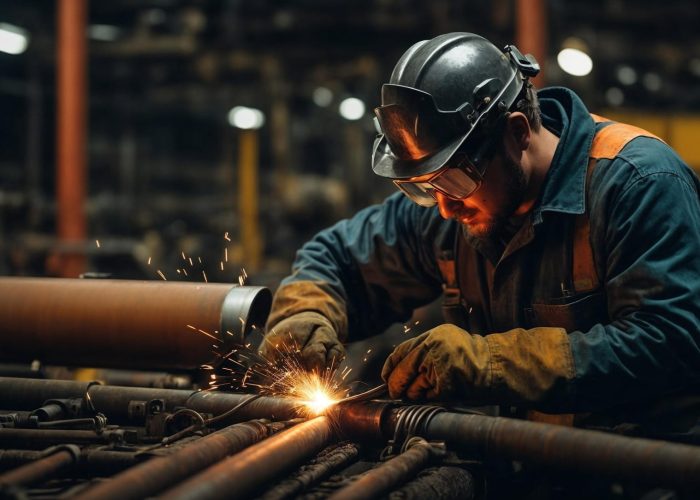
Stick welding, also known as Manual Metal Arc Welding (MMA) or Shielded Metal Arc Welding (SMAW), is one of the most reliable, versatile, and widely used welding processes in industry today. It is a manual arc welding process that uses a consumable electrode coated with flux to lay the weld, creating a robust bond that withstands the most demanding environments. In this article, we will cover everything you need to know about stick welding.
Understanding the Basics of Stick Welding
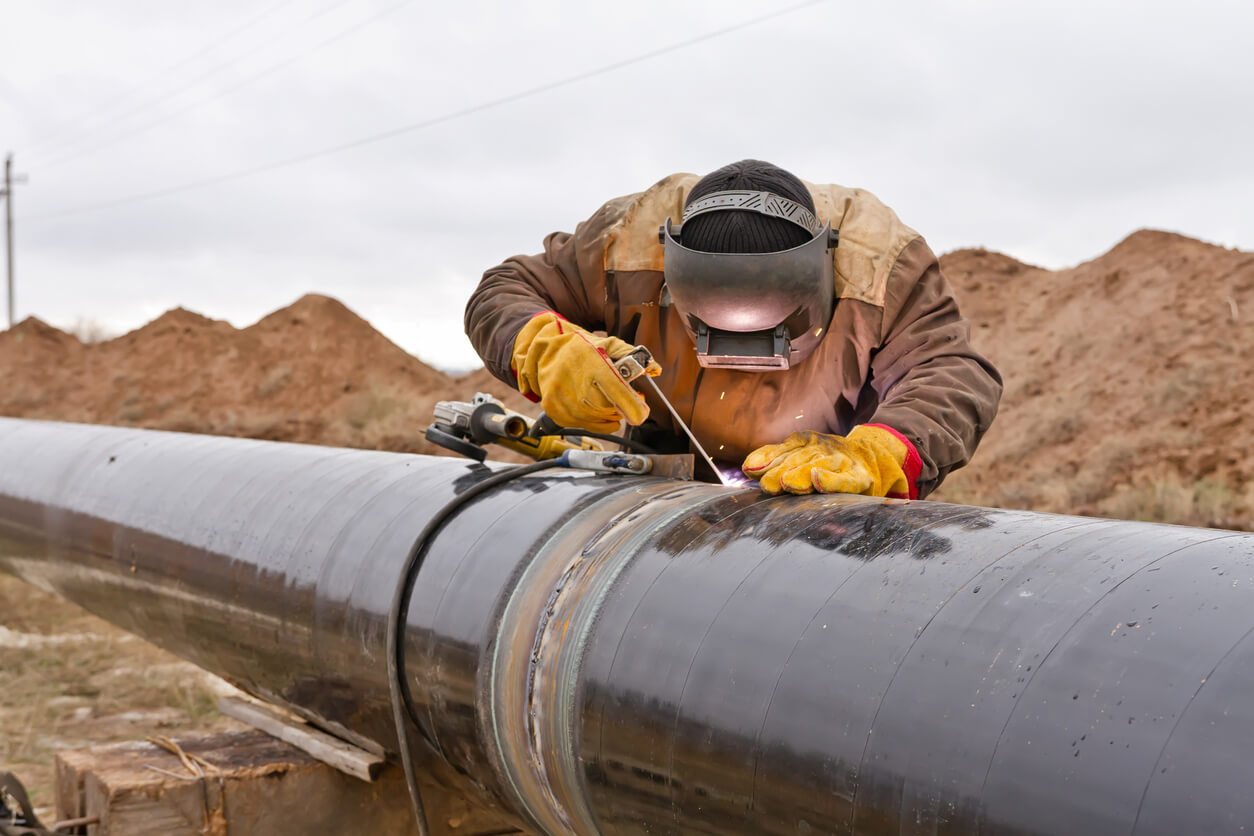
Stick welding is easy to learn. It operates on the principle of an electric arc struck between a metallic electrode and the base material.
- The Electrode: Often called the “stick,” this core wire conducts the current and acts as filler metal.
- The Flux Coating: As the electrode melts, the flux coating decomposes into a protective gas shield and a liquid slag. This protects the molten weld pool from atmospheric contaminants like oxygen and nitrogen.
- The Slag: Once the weld cools, the hardened slag is chipped away, revealing a high-strength joint underneath.
The Importance of AWS Certification
While the fundamentals of stick welding are straightforward, achieving the structural integrity required for industrial projects requires precision and safety. This is where AWS (American Welding Society) Certification becomes the dividing line between a DIY fix and a professional-grade build.
At WH Labs, our certified welders operate under strict AWS standards to ensure:
- Structural Reliability: Every weld is executed to meet specific load-bearing requirements and building codes.
- Safety Compliance: Certified welding minimizes the risk of joint failure, which is critical for high-pressure piping, heavy machinery, and structural steel.
- Quality Assurance: From proper electrode selection to multi-pass inspection, our certification guarantees that the internal metallurgy of the weld is as clean as the surface bead.
When the stakes are high and the environment is demanding, a certified stick welder equipped with state-of-the-art welding technology ensures the job is done right the first time.
How Does Stick Welding Work?
Performing a code-quality stick weld involves five critical variables, often referred to as CLAMS:
- Current (Amperage): Setting the machine to the correct heat for the electrode diameter.
- Length of Arc: Maintaining a distance between the tip of the electrode and the workpiece roughly equal to the diameter of the core wire.
- Angle of Travel: Holding the electrode at a 5° to 15° “drag” angle in the direction of travel.
- Manipulation: Moving the electrode in a steady “stringer” bead or a slight “weave” to ensure proper side-wall fusion.
- Speed of Travel: Moving fast enough to keep the arc ahead of the weld pool, but slow enough to allow for a consistent bead width.
Stick Welding Techniques
While the basic “drag” is the foundation, professional SMAW involves specific manipulation patterns depending on the joint type and the required weld strength.
1. Stringer Beads
A stringer bead is a straightforward, narrow weld made by moving the electrode in a straight line with little to no side-to-side motion.
- Best For: Root passes, thin materials, and high-strength structural steel where minimizing heat input is critical to prevent warping.
- Pro Tip: For thicker joints, pros “stack” stringers (Stringer Stacking) rather than making one giant weld to ensure better fusion.
2. Weave Beads
A weave bead involves moving the electrode in a side-to-side pattern (Zigzag, Crescent, or Figure-8) as you move along the joint.
- Best For: Filling wide gaps, “capping” a finished weld for a smooth appearance, and vertical-up welding.
- The Pause: A key professional technique is “pausing at the toes” (the edges of the weld) to ensure the metal fuses properly to the sidewalls and avoids a defect called undercut.
3. Whipping (The “J-Step”)
Commonly used with 6010 or 6011 electrodes, this technique involves “flicking” the electrode forward out of the puddle and then back into it.
- Best For: Open-root pipe welds and “dirty” metal. The “whip” allows the puddle to freeze quickly, creating a “stacked dimes” look while ensuring deep penetration.
4. Drag vs. Push
In stick welding, the rule of thumb is: “If there’s slag, you must drag.”
* The Drag Technique: Pointing the electrode back toward the completed weld. This keeps the slag behind the puddle. This technique can be used for welding in the flat, horizontal, and overhead welding positions.
- The Risk: “Pushing” a stick weld almost always results in slag inclusions, where the protective coating gets trapped inside the metal, weakening the joint.
Stick Welding Equipment
Stick welding requires relatively simple equipment compared with many other welding processes. The core components are a welding power source, electrode holder, welding electrodes, work clamp, and basic protective gear.
Power Source
The power source supplies the electrical current that creates the welding arc. Stick welding machines can operate on AC (alternating current), DC (direct current), or both. Many modern units are inverter-based welders that allow users to select amperage and polarity depending on the electrode type and material thickness. Industrial environments may use larger transformer or generator-based machines, especially when welding outdoors or in remote locations.
Electrode Holder
The electrode holder, sometimes called a “stinger,” is a handheld insulated clamp that grips the welding electrode and conducts current to it. The welder uses the holder to control the electrode position and maintain the arc while welding. Holders are rated by maximum amperage and must match the output capacity of the welding machine.
Welding Electrodes
Stick welding uses consumable coated electrodes (welding rod). Each rod has a metal core wire that melts to become part of the weld, and a flux coating that stabilizes the arc and produces shielding gas and slag to protect the molten metal from contamination. Electrodes vary by diameter, coating composition, and intended use. For example, rods classified under the AWS A5.1 carbon steel electrode classification system (such as E6010, E6013, or E7018) indicate strength, welding position capability, and coating type. It is also important to select the appropriate electrode for your metal type and welding position.
Work Clamp and Ground Cable
The work clamp connects the welding machine to the metal workpiece or welding table. It completes the electrical circuit necessary for the arc to form. A secure metal-to-metal connection is required for stable current flow and consistent arc performance.
Welding Cables
Heavy-duty insulated cables carry electrical current between the power source, electrode holder, and work clamp. Cable size is selected based on the amperage used and the length of the cable run to prevent overheating and voltage drop.
Personal Protective Equipment
Stick welding produces intense ultraviolet light, sparks, and molten slag, so protective equipment is necessary. Standard gear includes a welding helmet with an appropriate shade lens, flame-resistant gloves, protective clothing, and safety boots. Adequate ventilation is also recommended to reduce exposure to welding fumes.
Advantages and Disadvantages of Stick Welding
While there are many advantages of stick welding, it can also be disadvantageous in some cases compared to other types of welding methods, depending on the job.
| Advantages | Disadvantages |
| Works well outdoors and in windy conditions. | Slower deposition rates compared to MIG. |
| Effective on rusty, dirty, or painted metals. | Requires frequent stops to change electrodes. |
| Highly portable; no gas cylinders required. | Produces significant smoke, sparks, and slag. |
| Versatile for many alloys and thicknesses. | Higher skill level required for clean results. |
Stick Welding Applications in the Industry
Because stick welding doesn’t require external shielding gas, it is the preferred method for:
- Heavy Construction: Structural steel framing for buildings and bridges.
- Pipe Welding: Oil and gas pipelines, especially in remote or windy locations.
- Maintenance & Repair: Heavy equipment repair for mining and agriculture.
- Shipbuilding: High-strength joints in massive marine vessels.
Conclusion
In conclusion, understanding stick welding basics, processes, advantages, limitations, and safety considerations helps you choose the right method for repairs, heavy fabrication, or outdoor welding projects where simplicity and portability matter.
WH Labs offers comprehensive welding services performed by highly experienced and certified welders, along with expert consultation, hands-on training, tailored materials recommendations, and quality control services to ensure your welding work is safe, efficient, and built to last.
FAQ
Is stick welding for beginners?
While stick welding has a steeper learning curve than MIG welding due to arc length and rod manipulation requirements, it is often taught first in trade schools. Mastering it provides a fundamental understanding of heat control and puddle physics.
What is stick welding used for?
It is used primarily for structural work, field repairs, and any application where portability is key. It is the go-to choice for outdoor welding where wind would blow away the shielding gas used in other processes.
What is stick welding best for?
Stick welding is best for thick materials (1/8″ and up) and outdoor environments. It is the most effective process for achieving deep penetration on heavy steel plates.
Is Stick welding AC or DC?
It can be both. DC (Direct Current) is the industry standard because it provides a smoother, more stable arc and better penetration. AC (Alternating Current) is generally used for entry-level stick welding machines or to prevent “arc blow” when welding magnetized metals.
What is the difference between Stick, MIG, and TIG welding?
- Stick: Uses a consumable rod; best for heavy, outdoor, or dirty metal. Stick welding is ideal for welding in tight spaces and hard-to-reach areas, making it a popular choice for shipbuilding and repair.
- MIG (Gas Metal Arc Welding – GMAW): Uses a wire feed; fast and easy to learn; best for thin-to-medium indoor production. MIG welding is not suitable for welding thicker materials.
- TIG: Uses a non-consumable tungsten; extremely precise and clean; best for welding thin materials and aesthetic work.
Read more about the TIG vs MIG welding here.
How much amperage or power is needed for stick welding?
Amperage depends on the electrode diameter. A common 1/8″ electrode typically requires between 75A and 125A. Heavy industrial rods may require 200A+.
How thick of metal can you stick-weld?
There is virtually no upper limit to the thickness you can weld. By using “multi-pass” techniques—stacking several weld beads on top of each other—certified welders can join steel plates that are several inches thick.